Palmer Blog
November 14, 2018

Unless your product or service is a single supplier in the market, your current and prospective clients will always have another choice. Often several. And if we have a choice, we’ll go with the one who has that something extra special and can solve our problem. This is a company’s unique selling proposition (USP) and it’s one of the main reasons your prospects will choose you over your competition. See what your USP might be by […]
November 13, 2017

Here are 5 tips to help you on your journey: 1) There’s always something. What is the most interesting thing that’s happened at your company today, yesterday, last week or last month? What’s coming down the pipe next month? Schedule a set time every week or two and put pen to paper or fingertips to your keyboard. 2) We’re always learning. Share your wisdom freely. You certainly know more today than you used to. Spread […]
September 1, 2017

A couple of weeks ago I turned my ankle and came crashing down. After a few days of hobbling around, I went to my Doc who recommended an X-ray… and sure enough… a fractured fibula. Has it slowed me down? You betcha. And I have several weeks ahead of me to mend and get back at it. The upsides to my change in circumstances are; strangers become friends, hold doors open and ask how […]
August 20, 2015

Confidence. If you exude confidence, even if you lack substance, people will listen. If you have both, combined with an above average product, you will be very successful. If your confidence is superficial and there to disguise your lack of substance, it will soon become apparent… unless, of course, you are only selling to like-minded individuals. Operations people that cross over to sales can be powerful representatives for your company. They can take a consultative […]
August 4, 2015

Over the last 27 years I’ve been involved in many revamps to company brands, hundreds probably…mostly in the transportation sector. When it comes to physically changing the name, I’ve done much less. Why? In the B2B world, the equity in your company lies in the name, not the physical look of your brand. As a matter of fact, you could change the look of your brand daily with very little negative effect other than the […]
July 10, 2015

Hard to believe we’ve been at this since 1988. I started out being younger than all my clients but that is certainly no longer the case. Our team is young and talented though and our work stands up against just about any yardstick you care to measure us by…something I’m very thankful for. Before I started this company I had set up an internal marketing department for a large air freight forwarder. I’m not […]
February 24, 2015
Things have changed…again! From our perspective, your online marketing is a detail you need to look at more seriously due to the ease, popularity and importance of the various digital media available. Aligning your online message with the reality of who your company is today and where you want to go in the future, matters more than ever. Most businesses have grown and survived because they do a great job, service their customers well, establish […]
December 5, 2014
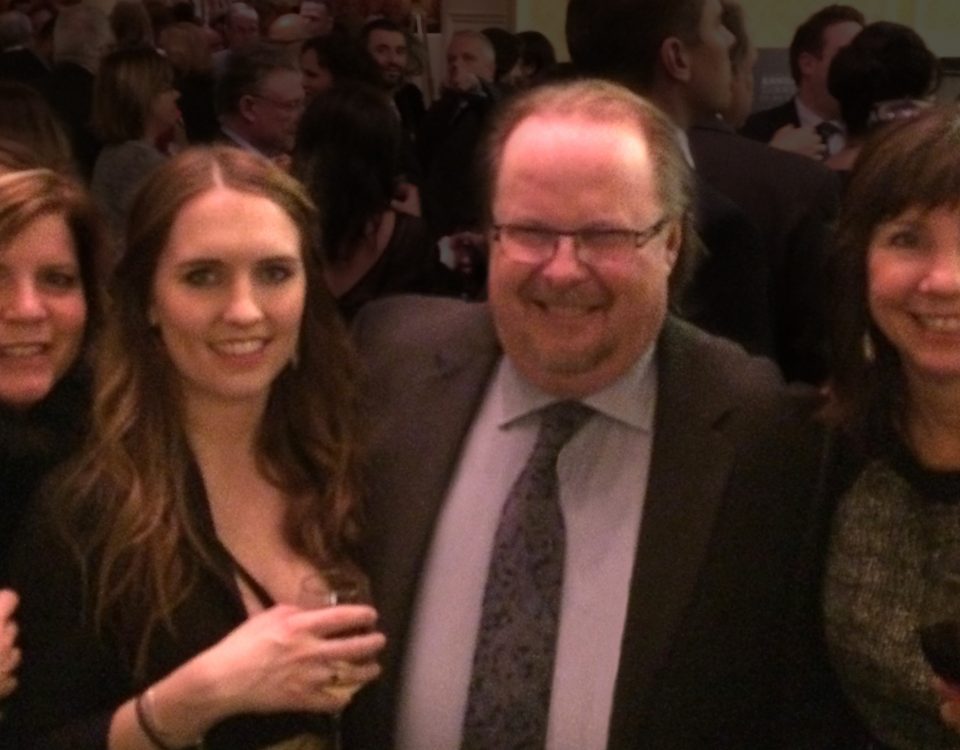
I’ve been going to the TTC Annual Dinners for as long as I’ve had my business, 27 years. I enjoy seeing the people in the industry, many I’ve known for decades. The Annual Gala is steeped with tradition and it was a record attendance for the Royal York last night. The club attendance was about 50% more than the population of my home town of Hartland, NB. Ben Mulroney was the guest speaker, about a […]



 I started Palmer Marketing at age 34 in January of 1988. I had 2 kids in diapers and a crazy idea about running my own company. I came from an entrepreneurial family and had no good reason to believe it wasn’t possible and as it happens, it was.
 I’m definitely a country girl. I didn’t grow up in an actual town, village or hamlet. It was more like the middle of somewhere along Highway 28, surrounded by trees. Many thanks goes to my high school art teacher, Mr. Edwards, for inspiring me to choose this career path. With the realization that I actually could create art for a living, college lured me away from country life to the big city. Kitchener, to be exact, to study Graphic Design & Advertising at Conestoga College. Talk about beginning an adventure and a culture shock! Not staring at people with purple, green or some other wildly coloured hair was a bit of a challenge. City buses (lol thinking back), who knew they only stopped on the same side of the street as the bus stop sign!? Lesson learnt.
 I love my work like I love summer. Why not? Summer is when I get to play my favorite sport—golf! Playing artist is a lot like playing golf. You need to be calm and cool under pressure if you ever hope to keep the ball in play; that’s rare for an artist. My best shots happen when I talk less and concentrate more; that’s not so rare for an artist.
 I am the 8th of 9 children raised in Essex County outside of Windsor, Ontario. We lived on a gravel road, no sidewalks and our greatest adventures were in our own backyard. I still have friends I made in grade 1 and continue to stay in touch today. After graduating from the University of Windsor with a Bachelor of Commerce degree, I moved to the big city of Toronto and have worked most of my career in the printing industry. I got to know the folks at Palmer Marketing as a key supplier to them for over a decade.
 To say the apple doesn’t fall far from the tree would be an understatement in my family; at least when it comes to picking a career path. There isn’t a person in my immediate family that hasn’t at some point or another worked in the IT field. I guess there’s something in our DNA that pulls us towards computers.